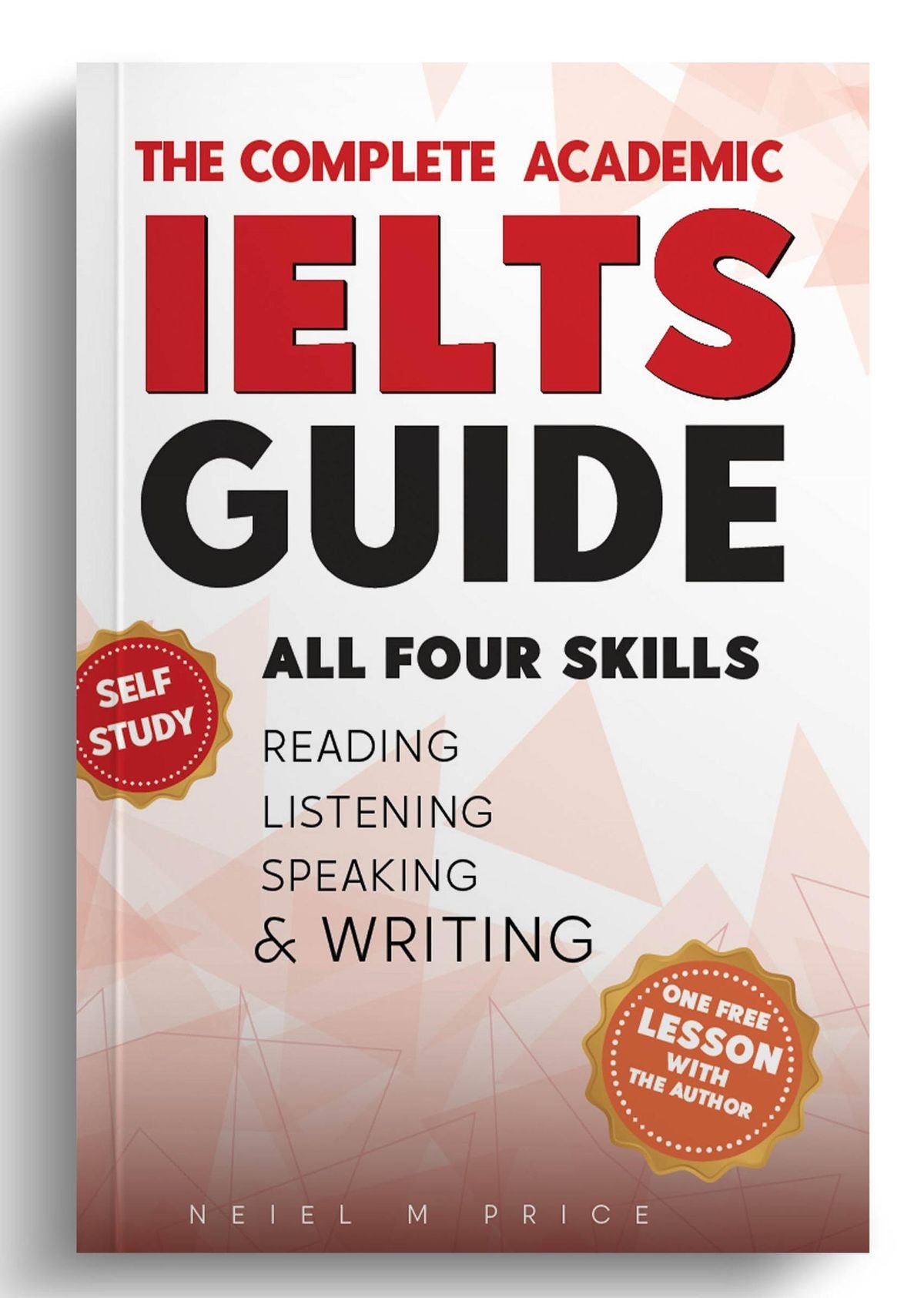
Every year millions of students around the world are looking for IELTS guide before preparing to sit in for the IELTS exam, such as how to register, what scores are needed, and last minute tips on the day of the test. If you are studying for the IELTS you have probably typed many of these same questions into Google yourself.
This guide answers the most commonly searched IELTS questions in one place saving you hours of research and giving you a clear structured path from zero to your target band score.
Quick Answer: IELTS (International English Language Testing System) is the world’s most popular English language proficiency test, with more than 11,000 organisations worldwide including universities, employers and immigration authorities.
What Is IELTS? (And Why Does It Matter?)
IELTS denotes the International English Language Testing System. The British Council, IDP: IELTS Australia, and Cambridge Assessment English collaboratively oversee its management. The assessment evaluates your proficiency in reading, writing, listening, and speaking English at an academic or professional standard.
You need IELTS for:
- University admissions in the UK, Australia, Canada, USA, and beyond
- Skilled worker and permanent residency visa applications (UK, Canada, Australia, NZ)
- Professional registration — nursing, medicine, engineering in English-speaking countries
- School enrollment and scholarship applications
IELTS Academic vs. General Training — Which One Do You Need?
This is one of the most searched questions before registration. Choosing the wrong version is a costly mistake, so get our IELTS guide first before going in for the exam.
| Feature | IELTS Academic | IELTS General Training |
| Purpose | University / higher education admissions; professional registration | Immigration (UK, Canada, AUS, NZ); work experience; secondary school |
| Reading texts | Academic journals, books, newspapers | Advertisements, workplace notices, official documents |
| Writing Task 1 | Describe a chart, graph, diagram, or map | Write a formal or semi-formal letter |
| Writing Task 2 | Essay (same for both versions) | Essay (same for both versions) |
| Listening & Speaking | Identical in both versions | Identical in both versions |
Quick Rule:
- Going to university? → IELTS Academic
- Immigrating or looking for work abroad? → IELTS General Training
- Not sure? → Check the specific requirement of the institution or visa you’re applying to.
IELTS Guide Exam Format — What to Expect on Test Day
The IELTS test has four sections. Total test time is approximately 2 hours and 45 minutes.
| Section | Details |
| Listening | 30 min | 4 sections | 40 questions | Recordings played once |
| Reading | 60 min | 3 passages | 40 questions | Academic or General texts |
| Writing | 60 min | Task 1 (20 min) + Task 2 (40 min) | Task 2 worth double marks |
| Speaking | 11–14 min | 3 parts | Face-to-face or video interview with a certified examiner |
The Speaking test is sometimes held on a different day from the other three sections. You can take IELTS on paper or on a computer, the scores are equivalent.
Understanding IELTS Band Scores
IELTS scores range from 0 to 9, reported in whole and half band increments. Your overall band score is the average of your four section scores, rounded to the nearest half band.
| Band Score | Skill Level |
| 9.0 | Expert — complete command of English |
| 8.0 | Very Good — fully operational with only occasional errors |
| 7.0 | Good — operational command with occasional inaccuracies |
| 6.0 | Competent — generally effective command despite some inaccuracies |
| 5.0 | Modest — partial command; copes with overall meaning in familiar situations |
| 4.0 | Limited — basic competence in familiar situations only |
What Band Score Do You Need?
- UK universities (undergraduate): Band 6.0–6.5 | (postgraduate): Band 6.5–7.5
- US top universities (Ivy League): Band 7.5–8.0
- Canadian universities: Band 6.5 (undergrad) / Band 7.0 (postgrad)
- Australian universities: Band 6.5–7.0
- UK immigration (Skilled Worker Visa): Band 4.0–6.0 depending on the role
- Australia / Canada immigration: Band 6.0–7.0
Section-by-Section Tips to Boost Your Score
Listening
- You hear each recording ONCE — underline keywords in questions before it starts
- Watch for spelling — incorrect spelling = wrong answer, even if the answer is right
- Answers follow the order of the recording — don’t jump ahead
- Practise with British, Australian, American, and Canadian accents
Reading
- Do NOT read the whole passage first — go to the questions, then scan for answers
- True / False / Not Given is the trickiest question type — ‘Not Given’ means the text simply doesn’t mention it
- For Matching Headings, read the first and last sentence of each paragraph
- Manage your time: aim for 17–20 minutes per passage
Writing
Task 1 (Academic — Chart/Graph/Diagram)
- Spend 20 minutes, write at least 150 words
- Describe the overall trend first, then key details — do NOT give your opinion
- Use data from the visual — never invent figures
Task 1 (General Training — Letter)
- Match the tone to the task: formal, semi-formal, or informal
- Cover all three bullet points given in the question — missing one lowers your score
Task 2 (Essay — Both Versions)
- Spend 40 minutes — Task 2 is worth DOUBLE the marks of Task 1
- Use a 4-paragraph structure: Introduction → Body 1 → Body 2 → Conclusion
- Give a clear position and stick to it throughout
- Avoid memorised templates — examiners are trained to spot and penalise them
- Aim for 250–290 words — quality over quantity
Speaking
- Part 1 (4–5 min): Familiar topics — home, work, hobbies. Give extended answers, not one-word replies.
- Part 2 (3–4 min): You get a cue card and 1 minute to prepare. Use all your preparation time.
- Part 3 (4–5 min): Abstract discussion. Give opinions and justify them with reasons and examples.
- Record yourself daily and listen back — most students are surprised by their own mistakes
Do NOT memorise scripted answers! speak naturally and fluently
IELTS vs. TOEFL — Which Should You Take?
Another top searched question. Here’s the honest comparison:
| IELTS | TOEFL iBT | |
| Accepted by | 11,000+ organisations worldwide | 12,000+ universities (mainly USA) |
| Format | Paper or computer-based | Computer-based only |
| Speaking | Face-to-face with a real examiner | Speak into a microphone, AI-scored |
| Reading/Listening | British/Australian/global accents | Primarily American English |
| Immigration | Accepted for UK, Canada, AUS, NZ visas | NOT accepted for immigration |
| Cost (approx.) | $230–$270 USD | $200–$300 USD |
| Result time | 3–5 days (computer) / 13 days (paper) | 4–8 days |
Bottom line: If you are applying to universities in the USA and prefer American-style testing, TOEFL is fine go for OET. For everything else immigration, UK/Australia/Canada universities, professional registration. IELTS is the safer, more universally accepted choice.
How to Register for IELTS
Registration is straightforward. Here’s the step-by-step IELTS guide process:
Step 1: Choose your test type and format
Decide on Academic or General Training, and paper-based or computer-based (results are equivalent).
Step 2: Select your test date and centre
Register through the British Council (britishcouncil.org), IDP (idp.com), or a local IELTS test centre. Computer-based tests are available almost daily in most cities paper-based tests run on set dates.
Step 3: Pay the registration fee
The fee is approximately $230–$270 USD depending on your country. UK Visas and Immigration (UKVI) IELTS costs slightly more (~$280–$320).
Step 4: Prepare your ID document
You must bring the same valid passport or national ID you used during registration. This must be original — photocopies are not accepted on test day.
Step 5: Receive your results
Results are available online within 3–5 days for computer-based tests and 13 days for paper-based. Your Test Report Form (TRF) is valid for 2 years.
Recommended Study Plan by Timeline
3 Months Out (Ideal)
- Take a full practice test first to identify your current band and weak sections
- Study 1–2 hours daily, focusing on your weakest section for the first 4 weeks
- Complete at least one Writing Task 2 essay per week and get feedback
- Build vocabulary daily — learn 10–15 new words with context, not just definitions
6 Weeks Out
- Shift to full practice tests under timed conditions (2x per week)
- Review every wrong answer — understand WHY it was wrong, not just what was right
- Record Speaking practice and compare to Band 7 sample answers
- Focus on grammar accuracy in Writing — one consistent error type drops your score
1 Week Out
- No new content — consolidate what you know
- Do one timed practice test to stay sharp
- Prepare your test-day documents: passport, confirmation, pen, water
- Sleep well — cognitive performance on the day matters more than a final cramming session
Frequently Asked Questions
How many times can I take the IELTS?
There is no limit. You can retake the test as many times as you need. Most people take it 2–3 times before reaching their target score.
How long is my IELTS score valid?
IELTS scores are valid for 2 years from the test date. After 2 years, institutions will not accept them.
Can I retake just one section of the IELTS?
Yes — IELTS One Skill Retake (OSR) allows you to retake just one section (Listening, Reading, Writing, or Speaking) within 60 days of your original test, without sitting the full exam again. Check with your test provider for availability.
What is a good IELTS score?
Band 7.0 is considered ‘good’ and meets the requirements for most universities and skilled worker visas. Band 8.0+ is excellent and opens doors to top-tier programs.
Is IELTS hard?
Difficulty depends on your current English level. Most non-native speakers who prepare consistently for 2–3 months reach Band 6.5–7.0. Reaching Band 8.0 typically requires near-native fluency and dedicated preparation.
Is paper-based or computer-based IELTS easier?
The content, difficulty, and scoring are identical. Computer-based offers faster results (3–5 days) and more available test dates. Choose whichever format you are more comfortable typing or writing in.
What score do I need for a UK student visa?
For a UK Student Visa (Tier 4), you typically need IELTS for UKVI with an overall band of 5.5–6.5 depending on the university and course level. Always confirm with your specific institution.
Final Thoughts
IELTS is a very achievable exam with the right preparation. The students who score highest are not necessarily the most naturally gifted they are the ones who practise consistently, get feedback on their writing, and understand exactly what examiners are looking for.
Start with a practice test to know your baseline, build a realistic study schedule, and focus your energy on your weakest section. With the right approach, your target band score is within reach.

Dr Hanif Khaan is a medical professional and founder of WispGold, a UK-based certification training platform helping international medical graduates navigate GMC registration, Royal College exams, English exams and NHS career pathways. With firsthand experience of the IMG journey to UK medical practice, Dr Khaan built WispGold to give international doctors the structured, expert-led preparation that makes the difference between passing and resitting. All content on WispGold is written and reviewed to reflect all College standards.